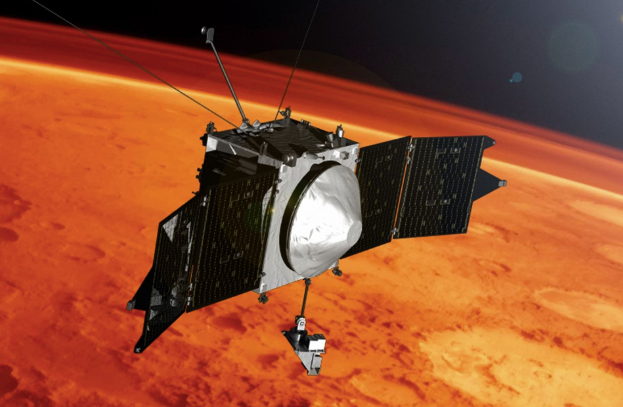
Mars exploration has evolved significantly through technological advancements. Rovers now come equipped with sophisticated instruments that enhance scientific data collection. Artificial intelligence algorithms play a pivotal role in analyzing the vast amounts of information gathered. Furthermore, autonomous drones contribute to mapping the Martian surface with unprecedented detail. As these technologies develop, the implications for future missions are profound, raising questions about what lies ahead in our quest to understand the Red Planet.
The Role of Rovers in Mars Exploration
Rovers serve as the eyes and hands of humanity on the Martian surface, significantly advancing the exploration of the Red Planet.
Their sophisticated rover capabilities, including autonomous navigation and advanced scientific instruments, enhance exploration strategies.
How AI Is Transforming Data Collection
As the quest to understand Mars intensifies, artificial intelligence (AI) emerges as a pivotal force in transforming data collection methods.
Machine learning algorithms analyze vast datasets efficiently, extracting valuable insights from Martian terrain and atmospheric conditions.
This advanced data analysis enhances decision-making for mission planners, enabling more accurate predictions and optimizing resource allocation, ultimately accelerating humanity’s exploration of the Red Planet.
The Impact of Autonomous Drones on Surface Mapping
A growing number of missions to Mars are leveraging autonomous drones to revolutionize surface mapping techniques.
These drones enhance surface analysis through advanced drone capabilities, allowing for high-resolution imaging and 3D mapping of Martian terrain.
Their ability to operate independently enables the collection of extensive data sets, facilitating a deeper understanding of the planet’s geology and potential resources, ultimately expanding exploration possibilities.
See also: Technology in Logistics and Supply Chain Optimization
Innovations in Communication Systems for Mars Missions
While the challenges of communication between Earth and Mars have traditionally hampered mission efficiency, recent innovations in communication systems are significantly enhancing data transmission capabilities.
Advances in signal processing techniques enable more robust signals, reducing latency and improving data integrity.
These developments facilitate real-time analysis and decision-making, empowering missions to explore Mars with greater autonomy and efficiency, ultimately enriching humanity’s understanding of the Red Planet.
Conclusion
In the ever-expanding universe of Mars exploration, technology serves as a beacon guiding humanity toward new frontiers. Rovers, AI, autonomous drones, and advanced communication systems collectively weave an intricate tapestry of discovery, unlocking the secrets of the Red Planet. As these innovations continue to evolve, they illuminate pathways for future missions, ensuring that our quest for knowledge transcends the boundaries of terrestrial understanding and ventures boldly into the cosmos.